February 21, 2010
Baltimore
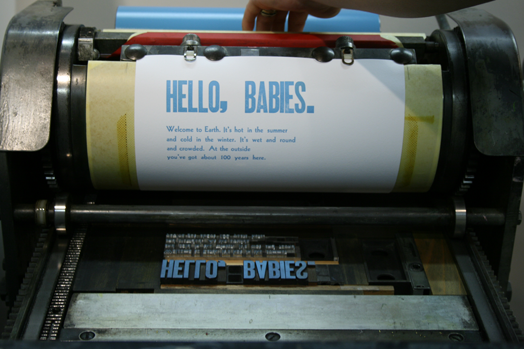
Hello, babies. Welcome to Earth. It's hot in the summer and cold in the winter. It's round and wet and crowded. At the outside, babies, you've got about a hundred years here. There's only one rule that I know of babies: God damn it, you've got to be kind.
- Kurt Vonnegut, Jr.
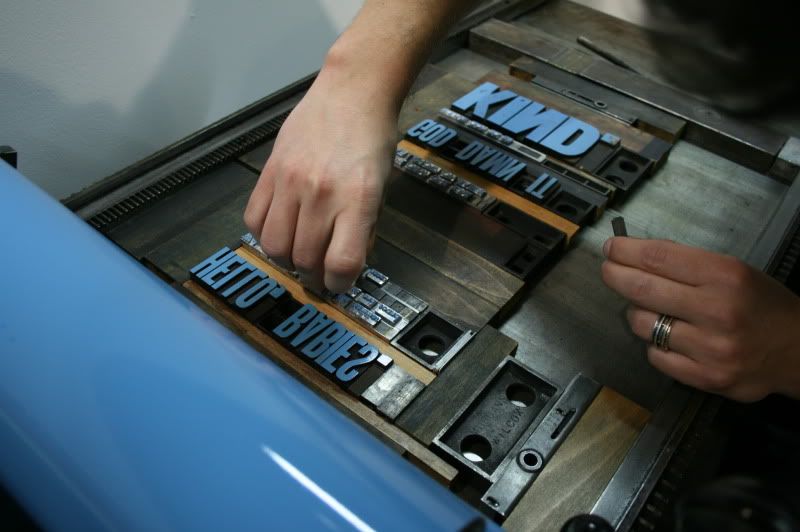
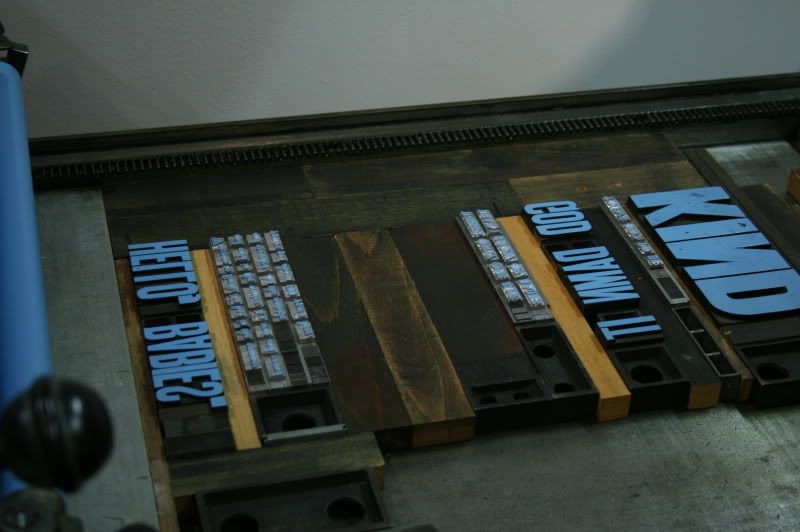
We carried 'HELLO' in the left and 'BABIES' in the right; learned a new lingo and laid the good word of Vonnegut in a type with bite.
Mary Mashburn and Steve St. Angelo of Typecast Press in Baltimore helped me create an 11 x 17 letterpressed poster Saturday -- a birthday gift (with a trip) from Chase.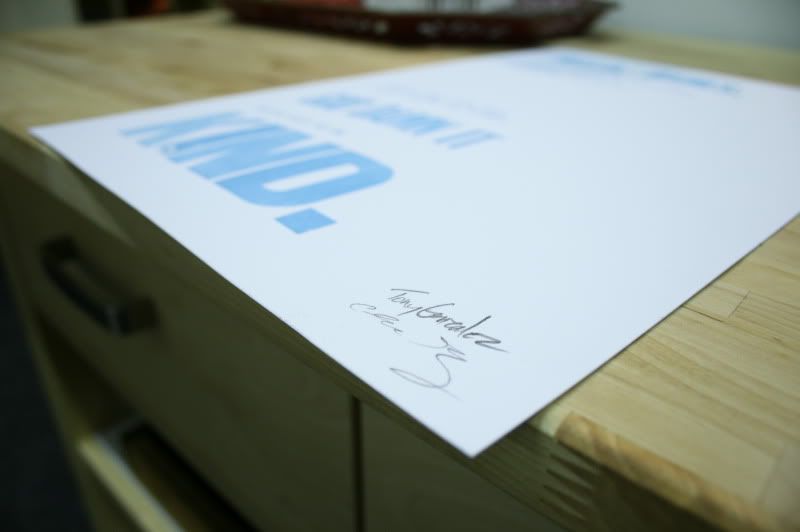 ------
  ------
  -----
----- 
"I'm upish," went my text message to Chase at 7:15 Saturday morning. He responded, I readied, and by 8 we were rolling for Baltimore -- bound for type and blight as we left blue ridges behind.
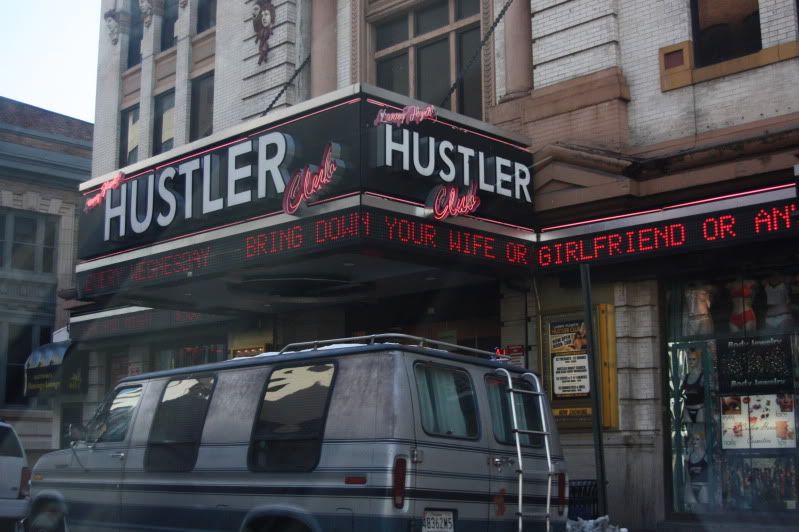
Interstate 95 carried us to the harbor town, where smokestacks and stadiums made for our first impressions. We flowed through the heart of downtown -- my navigation of course leading us onto a street of sin (oddly(?) located on the well-traveled namesake street of the city: E. Baltimore Street).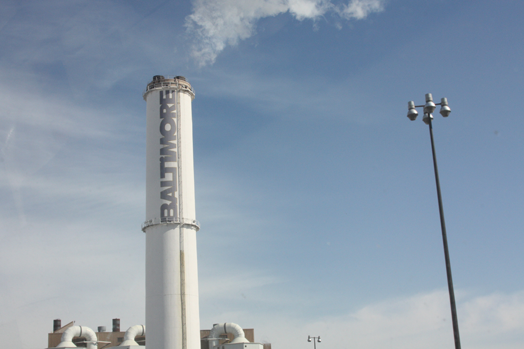
Residential streets meant row after row of rowhouses, differentiated across the city by brick and brightness, by broken windows and embellishments. Block after block, Chase squeezed us through streets piled high with snow. Dozens of chairs -- folding, rolling, plastic, and cracked -- saved shoveled parking spots.
We visited Atomic Books near the happenin' Hampden district (although we didn't know that 36th was the shit. Yet.)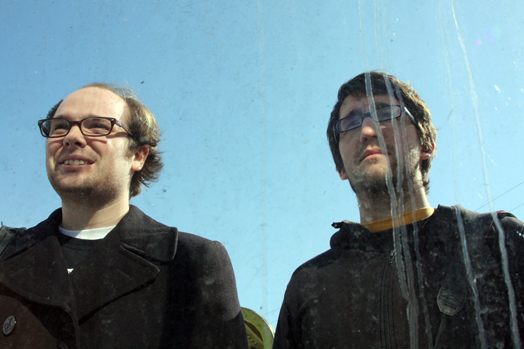
Our first big-ticket destination was an exotic salvage warehouse on the city's southwest side. To get there, we lived out our Wire fantasy by rolling along North Avenue and Monroe Street in the Western District, where tacked teddy bears marked murders and second-floor windows were mostly broken if not already boarded. Hundreds of homes later -- and we're talking dense rowhouses -- the blight had barely subsided. It shocked me. Detroit? Charming place, next to Baltimore.
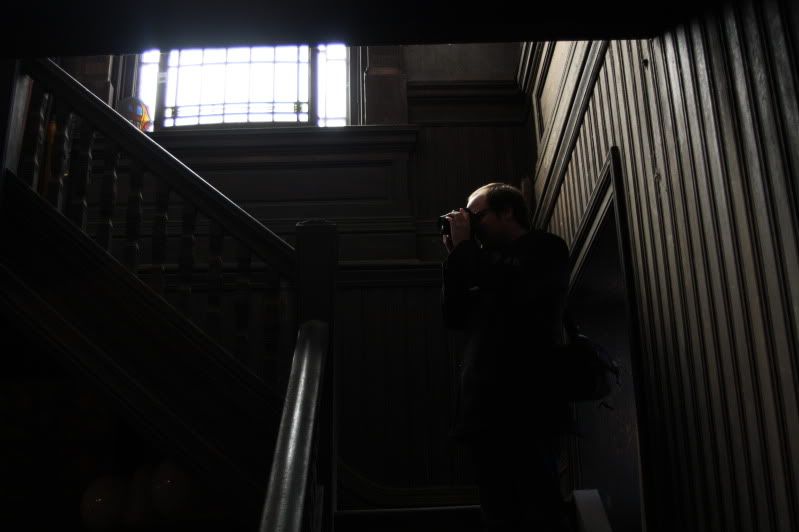
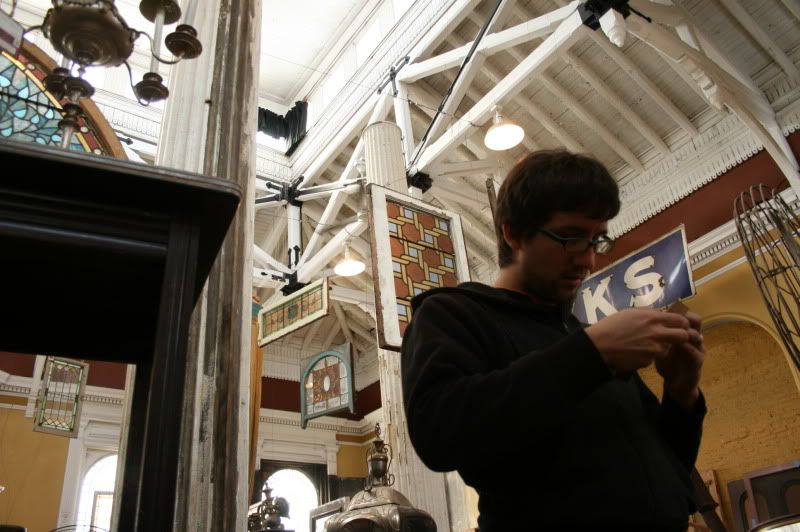
The booty at the end of our rundown rainbow was Housewerks, which behind gleaming barbed wire, greeted us with one of the largest mirrors ... ever left outdoors in the winter. A teeter totter later, we were inside one of the most arrestingly cool stockup spots we've ever seen. Beside the pirate ship-sized rope was a 40-foot freakshow banner. Stained-glass windows hang from the rafters, old metal letters above a fireplace mantel. A million-pound (or so) money safe lolled its door open. We bought the smallest items possible: a blue "walk" sign from a traffic signal, and a slew of small woodcut images for ink pads. ------
  ------
  -----
----- 
Serendipity pushed our wandering toward South Baltimore, where we found at least one location recognizable from The Wire, season two: the mill where the stevedores worry about condominium revitalization. We looped through Locust Point, ate crab at LP Steamers, and watched the unloading of a Domino sugar ship.
Book Thing of Baltimore yielded 12 terrific books that might go toward Katie's projects. The great thing about Book Thing is you can take up to 180,000 books out for free per trip.
I bought one random $1 record at Normal Records.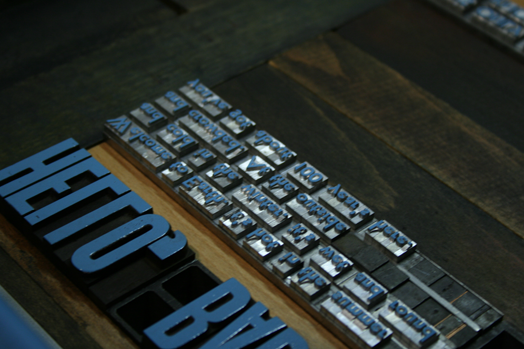
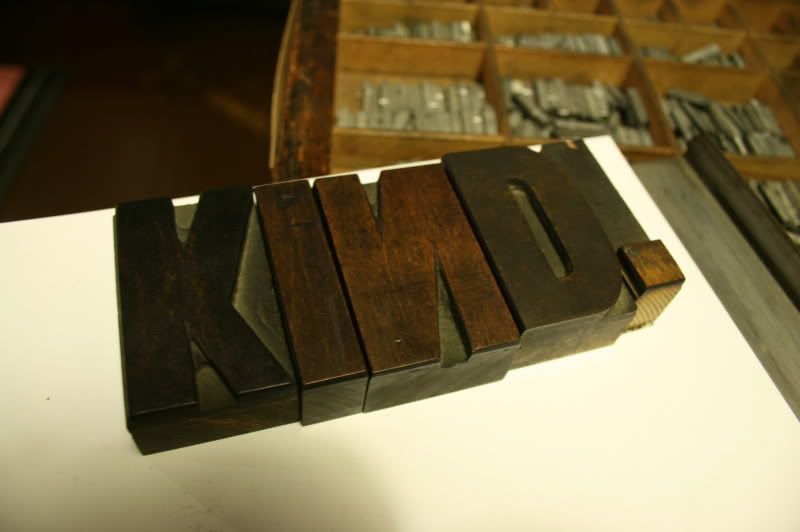
The crescendo of our travels came at Typecast Press, where despite a spongy 'K' and an 'N' a bit nicked, our frolicking among printing methods from days gone by led to an exceptional broadsheet.
Five hours can fly by when surrounded by nearly a dozen printing presses and drawers teeming with type. We could have spent days just marveling at the studio space. Instead, we worked diligently to set type, one letter at a time, while Mary shared stories of old pressmen and unbridled geeklove for the language of letterpress.
I've long dealt in picas and kerning, but never knew how literal "leading" could be. Strips of lead are used to separate lines of text. More lead means more space between lines. "Uppercase" and "lowercase" make more sense now too -- the words indicate where your hands should roam to pluck particular letters out of the large "case" that holds them. And I knew it before, but felt it firsthand Saturday when I literally was out of "sorts" (the lowercase 't,' in particular).
We hit it off really well with Mary and Steve -- fellow journalists -- who got the vibe that we are "young journalists who are still into it." We are. And we're into their type thing. We really enjoyed hearing Mary talk about newspapers and letterpress as an art of words.
By 10 p.m. we'd learned about furniture and Scrabble-boosting terms like "quoine key," "reglet," and "tympan" that play into securing our blocks of text into a Vandercook press. We'd also corrected a few backward apostrophes en route to rolling out our limited-edition series of Vonnegut posters.
I think we kept it simple and sincere.
One remains in Baltimore. Ours are signed and framed. And the last is bound for a better place.
Photos:
- See more photos of the trip
Video:
- Water bottle rumbles on the trip to Baltimore
- Driving through the Western District
- 36th Street character
- A tour through Housewerks
- Tony selecting type
- Mary Mashburn demonstrating how to use the press
- Tony makes his poster
Direction:
- Map of our trip
Labels: driving, letterpress, photography, The Baltimore Sun, travel
by Tony at 11:05 PM |
9
comments (create) - (View)