There's a bit in the new Aziz Ansari standup special (which, BTW, is fantastic) where he refers to meaningless Wikipedia surfing as "Joe Pesci research." I can't find the bit online yet, but here's the gist at the end of this Letterman clip:
That got me thinking about my own meaningless internet searches. I went back into my history for the past couple days just to see what sort of dumb stuff I search for. Here's a slightly abridged history, starting with the most recent:
aziz ansari youtube aziz ansari joe pesci joe pesci research russel westbrook (sic) waterloo blackhawks USHL bemidji state beavers wauxobda bulldogs big pimpin iso sensitivity conan on letterman maggie q baseball night in america bemidji pioneer iphone bemidji pioneer app bemidji pioneer grandmas boy james lipton
As you can clearly see, the Internet was created by Satan for the sole purpose of making us waste time looking up dumb stuff.
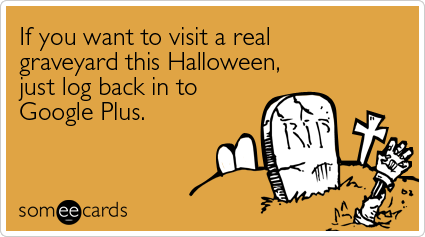
At least it's dead when it comes to sharing items, which was one of the primary functions for me. The sharing options transformed it into a tight-knit, and effective information sharing community. A place for swapping animated .GIFS, silly news, and serious journalism updates. Now it's just a utilitarian tool for keeping track of my internet habits. It kind of sucks.
My initial rage at the integration of Reader into the now cemetery-like Google+ died down about 24 hours after the change. But I feel my friends and I are going through the withdrawal stages. Seriously, I've had so many run-ins this week where I excitedly went to share an item, only to realize the buttons to do so have vanished. The really important things I posted to Facebook, which only made me feel kind of dirty -- that's not how I want to use Facebook. And Google+ sharing lacks the simple, intuitive functionality that I prefer.
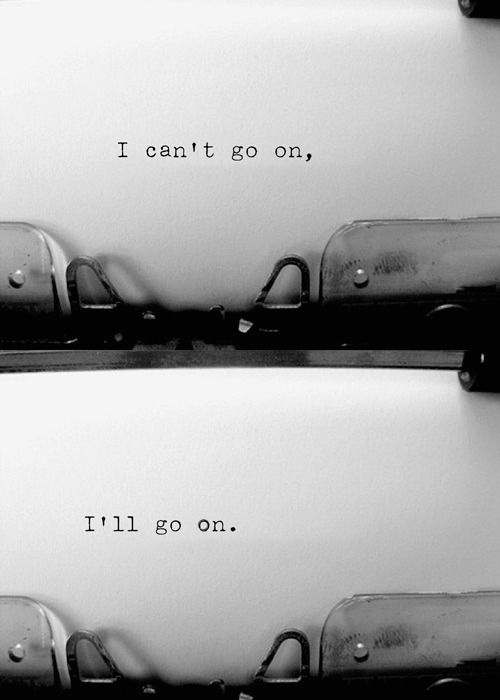
So I'm resolved to feel this way:
Actually, that image is from a fun and recurring graphic series that's popped up in my Google Reader over the past few days. I love it. I would have loved to share it with you sooner. Sry 2 say, it's not my fault.
Regardless, the world moves on and I must adapt. Perhaps this means more posts for this blog, a sliver of optimism I can pull from the fallout of this mess. Here are some other items I found interesting:
They aren't all serious shares, after all, it's kind of tough to care that much about the Bieber news (and the ever-pissy Andy Rooney death news didn't make the cut). But still, it was that mix of silly!stupid and serious shares that made going to Reader multiple times a day so much fun. For a couple of days Google was dead to me. Then I realized the middle ground, that unlike other social networking websites, Google kept the same look for years. I appreciate that, and I'll weigh that when considering my loyalty to Google (not that loyalty even matters when it comes to Google, it's fingerprints are on everything I touch).
The landscape changes, I suppose. And now that we're in this post-apocalyptic, post-Reader world, where sharing items lives in the black market of random emails and annoying Facebook spam, my mind turns to this response:
“The days of you having a different image for your work friends or co-workers and for the other people you know are probably coming to an end pretty quickly ... Having two identities for yourself is an example of a lack of integrity.”
If I have one positive thing to say about people like Zuckerberg and Google CEO Eric Schmidt, it's that I commend their frankness.
“If you have something that you don't want anyone to know, maybe you shouldn't be doing it in the first place.”
Contrary to what Zuckerberg and Schmidt appear to believe, the idea of separating certain private activities, interests, and social relationships from one's public persona is not a new vice enabled by the Internet. It's a long-observed social habit. Ethics guru Michael Zimmer nails it:
Individuals are constantly managing and restricting flows of information based on the context they are in, switching between identities and persona. I present myself differently when I’m lecturing in the classroom compared to when I’m have a beer with friends. I might present a slightly different identity when I’m at a church meeting compared to when I’m at a football game. This is how we navigate the multiple and increasingly complex spheres of our lives. It is not that you pretend to be someone that you are not; rather, you turn the volume up on some aspects of your identity, and tone down others, all based on the particular context you find yourself.
Zuckerberg may wish to challenge that paradigm. But whether or not this social behavior should be encouraged or discouraged merits a fair discussion, not an blanket accusation of duplicitous intent.
Each Friday we share our Web discoveries, mostly pulled from our RSS feeds and Twitter accounts. If there's something we should know about, please write to thesadbear [at] gmail [dot] com.
Typical women apply about six strokes of mascara per eye. Volume seekers ramp that up to about 30 or 40, then sometimes employ toothpicks, paper clips, pins or the backs of their earrings to poke through the clumps, CoverGirl executives say. "When we asked them why they do this, they blamed their lashes, not their mascara," says Esi Eggleston Bracey, P&G's vice president of global cosmetics, shaking her head. "That's when we knew we had an opportunity."
Jack says: Just found this today while working on that Chamber story. Is this new? I've been playing with it all day. I think we should try and do a post on it, where we basically just fuck around with data for our respective areas.
Staying busy lately. I'm enrolled in a (miraculously cheap) beginners' American Sign Language course through a local rec & parks department. Yes, they say "Rec & Parks." Just like "they" don't pronounce the U in Staunton.
We've also joined a gym. Trips to Charleston (done) and Baltimore soon, then the Luray Caverns and the Newseum later this year. Maybe Philly too; NYC; Oatess in Athens, Ohio.
I wanted to post a few items as tips -- for lack of a better word -- and maybe calls to action.
1. Heard this on the radio today: RefreshEverything is giving out $5,000 grants for lots of different ideas, based on popular vote. 2. Photogs should check out the Getty Images call for artists on Flickr. Consider submitting. 3. If not already using Google Reader to follow blogs and news and friends, get with it. 4. Perhaps the best way to track Web site stats is Google Analytics. Who else? 5. Katie has a blog!
Google Image Labeler is a "game" where you rush to describe photographs while an anonymous partner somewhere in cyberspace does the same thing with the same photos. You get points for hitting on the same description tag. Go play it.
They just added Tasks and SMS/text messaging, and they've apparently had Superstars (analogous to "flags" in Outlook), Canned Responses, a Forgotten Attachment Detector, and a Vacation Time auto-responder for a while.
This is also where you can find the famous "Mail Goggles" gadget, which aims to prevent drunken emails by forcing the sender to solve a few simple math problems depending on the time of night.
I'd been wanting a Tasks gadget for a while, and my phone's per-message text fees are highway robbery, so I might test drive the SMS gadget too.
+ Malcolm Gladwell has a new book on the way about how people rise to the top and what it means to be an expert. He talked with the WSJ about it. I'm chasing more expertise links, via Wikipedia, etc. So far...
+ My GoogleReader is really important. I'm not sure what Tumblr is all about, but I found one Tumblr to GoogleRead and it showed me this photo.
+ Investigation into U.S. Air Marshals. + The horror of fire is bothering me more lately. + DNA evidence is clearing innocent convicts, in some places more than others.
Ironically, the dropdown has different suggestions for Jim Morrison, Keith Richards, Lou Reed, and even Steven Drozd, a Lips member whose heroin habits almost killed him. Conversely, it's been 20 years since Wayne's last psychedelic experience.
Google's graphs reflect the frequency, throughout a specified time span, with which a particular term has been searched for on Google. Google News articles can also appear as pushpins on the graph.
Google Trends is also, not surprisingly, useful and cool for non-writers. For example, there have been claims that political and media pressure on Barack Obama to name his running mate is wildly disproportionate to the pressure on John McCain to do the same, especially considering that the Democrat secured the nomination a week ago, and the Republican has been presumptive nominee for months. A graph of these two trends corroborates the discrepancy.
While Googling myself to find out my real legacy, I've found that there's a blog devoted to Michigan Beer that happened to feature my story on the subject. Kind of sweet.
To pose a question: what makes a good legacy, anyway?